Stories →
Toyota
Content Design
Toyota dealer training transformation
The buyer/seller dynamic shifted overnight
Picture this: A customer walks into a Toyota dealership in 2011. They know more about the Camry Hybrid than the salesperson. They've spent 47 hours researching online. The dealer has a three-ring binder from 3 years ago.
Guess who wins that conversation?
Research road trip
We visited 16 cities to find out how to rethink the dealer training experience. Interviewed and surveyed 200+ dealers. What we found was... enlightening. The real kicker? Toyota was sending dealers 400 pages of updates every month. By email. To print out. In the mid-2010’s. The information was literally obsolete before it arrived, and customers with iPads were eating their proverbial lunch. Even when the new hot sheets were announced, they were from emails of downloads that the old ISDN lines in rural areas could barely handle.
Old stereotypes no longer apply
These weren't the slick car salesmen you see on TV. They were all ages and all levels of experience:
Average age: 42
Tech comfort level: "I can check email"
Training method: "Bob's been here 20 years, ask him"
Biggest fear: "Looking stupid in front of customers"
One dealer showed us his "system" of 17 binders, 2,000+ Post-it notes, and a laptop from 2007 running Windows XP. But he also knew where to pull the customer in to park after a drive-along. Never in the spot where they left… go in front of the picture window at the dealership, where the customer can see themselves behind the wheel. He was their top seller.
The hidden truth about car salespeople
Here's what nobody tells you: Selling cars is actually complex as hell. A good dealer needs to know:
12 different models
5 trim levels each
47 possible options packages
Financing for 7 credit tiers
Lease vs. buy calculations
Trade-in values
Competitor comparisons
Local incentives that change weekly
Now multiply that by customers who've done their homework.
No wonder dealers both new and old were terrified.
The buyer/seller dynamic shifted overnight
Picture this: A customer walks into a Toyota dealership in 2011. They know more about the Camry Hybrid than the salesperson. They've spent 47 hours researching online. The dealer has a three-ring binder from 3 years ago.
Guess who wins that conversation?
Research road trip
We visited 16 cities to find out how to rethink the dealer training experience. Interviewed and surveyed 200+ dealers. What we found was... enlightening. The real kicker? Toyota was sending dealers 400 pages of updates every month. By email. To print out. In the mid-2010’s. The information was literally obsolete before it arrived, and customers with iPads were eating their proverbial lunch. Even when the new hot sheets were announced, they were from emails of downloads that the old ISDN lines in rural areas could barely handle.
Old stereotypes no longer apply
These weren't the slick car salesmen you see on TV. They were all ages and all levels of experience:
Average age: 42
Tech comfort level: "I can check email"
Training method: "Bob's been here 20 years, ask him"
Biggest fear: "Looking stupid in front of customers"
One dealer showed us his "system" of 17 binders, 2,000+ Post-it notes, and a laptop from 2007 running Windows XP. But he also knew where to pull the customer in to park after a drive-along. Never in the spot where they left… go in front of the picture window at the dealership, where the customer can see themselves behind the wheel. He was their top seller.
The hidden truth about car salespeople
Here's what nobody tells you: Selling cars is actually complex as hell. A good dealer needs to know:
12 different models
5 trim levels each
47 possible options packages
Financing for 7 credit tiers
Lease vs. buy calculations
Trade-in values
Competitor comparisons
Local incentives that change weekly
Now multiply that by customers who've done their homework.
No wonder dealers both new and old were terrified.
The strategy: playing to their competitive side so it didn't feel like school
Dealers hated training. So we didn't call it training.They loved winning. My favorite part of the project was developing training materials to educate stakeholders, as well as creating testing scripts for a feature that would reward dealers for their usage.
The badge system
Badge | How To Earn | What It Meant | The Real Psychology |
|---|---|---|---|
Camry Champion | Know everything about Camry | "I'm the Camry guy" | Identity creation |
Tech Genius | Master all technology features | "Ask me about Entune" | Expertise signaling |
Road Warrior | Access from mobile | "I hustle differently" | Status differentiation |
Closer | Track 10 sales through system | "I get results" | Performance proof |
The genius part? Other dealers could see your badges. Suddenly, learning became competing.
Content that spoke dealer, not engineer
Toyota's old training was written by engineers. For engineers. That had to be the first thing to fix for the dealer to have better conversations with customers.
Before | After |
|---|---|
"The 2.5L Dynamic Force Engine features D-4S injection technology combining direct and port injection for optimal combustion efficiency." | "Gets 41 MPG city. Best in class. Customers care about gas prices, not injection systems." |
The conversation translator
We created "dealer speak" for every feature:
Feature | Toyota Says | You Say | Customer Hears |
|---|---|---|---|
Star Safety System | "Electronic stability control with ABS" | "Keeps you safe when roads get crazy" | "I won't crash" |
Entune | "Integrated multimedia platform" | "Your phone talks to your car" | "I can use Spotify" |
D-4S Injection | "Dual injection technology" | "Better gas mileage and power" | "Saves money" |
The Ecosystem Map that changed everything
The team didn't understand how all Toyota's systems connected. So we mapped it. For the first time, content owners and SMEs could see:
Where vehicle data lived, and if it was going away
How inventory connected to training
Why certification mattered for allocation
How their performance affected their business
The strategy: playing to their competitive side so it didn't feel like school
Dealers hated training. So we didn't call it training.They loved winning. My favorite part of the project was developing training materials to educate stakeholders, as well as creating testing scripts for a feature that would reward dealers for their usage.
The badge system
Badge | How To Earn | What It Meant | The Real Psychology |
|---|---|---|---|
Camry Champion | Know everything about Camry | "I'm the Camry guy" | Identity creation |
Tech Genius | Master all technology features | "Ask me about Entune" | Expertise signaling |
Road Warrior | Access from mobile | "I hustle differently" | Status differentiation |
Closer | Track 10 sales through system | "I get results" | Performance proof |
The genius part? Other dealers could see your badges. Suddenly, learning became competing.
Content that spoke dealer, not engineer
Toyota's old training was written by engineers. For engineers. That had to be the first thing to fix for the dealer to have better conversations with customers.
Before | After |
|---|---|
"The 2.5L Dynamic Force Engine features D-4S injection technology combining direct and port injection for optimal combustion efficiency." | "Gets 41 MPG city. Best in class. Customers care about gas prices, not injection systems." |
The conversation translator
We created "dealer speak" for every feature:
Feature | Toyota Says | You Say | Customer Hears |
|---|---|---|---|
Star Safety System | "Electronic stability control with ABS" | "Keeps you safe when roads get crazy" | "I won't crash" |
Entune | "Integrated multimedia platform" | "Your phone talks to your car" | "I can use Spotify" |
D-4S Injection | "Dual injection technology" | "Better gas mileage and power" | "Saves money" |
The Ecosystem Map that changed everything
The team didn't understand how all Toyota's systems connected. So we mapped it. For the first time, content owners and SMEs could see:
Where vehicle data lived, and if it was going away
How inventory connected to training
Why certification mattered for allocation
How their performance affected their business
What really mattered
The three-ring binders didn't disappear overnight. But they became backup, not primary. Old school sellers stopped fearing educated customers. They started welcoming them. For the greenhorns just coming onto the floor fresh from selling phones, the conversation changed from "Let me check" to "Let me show you."
The culture shift
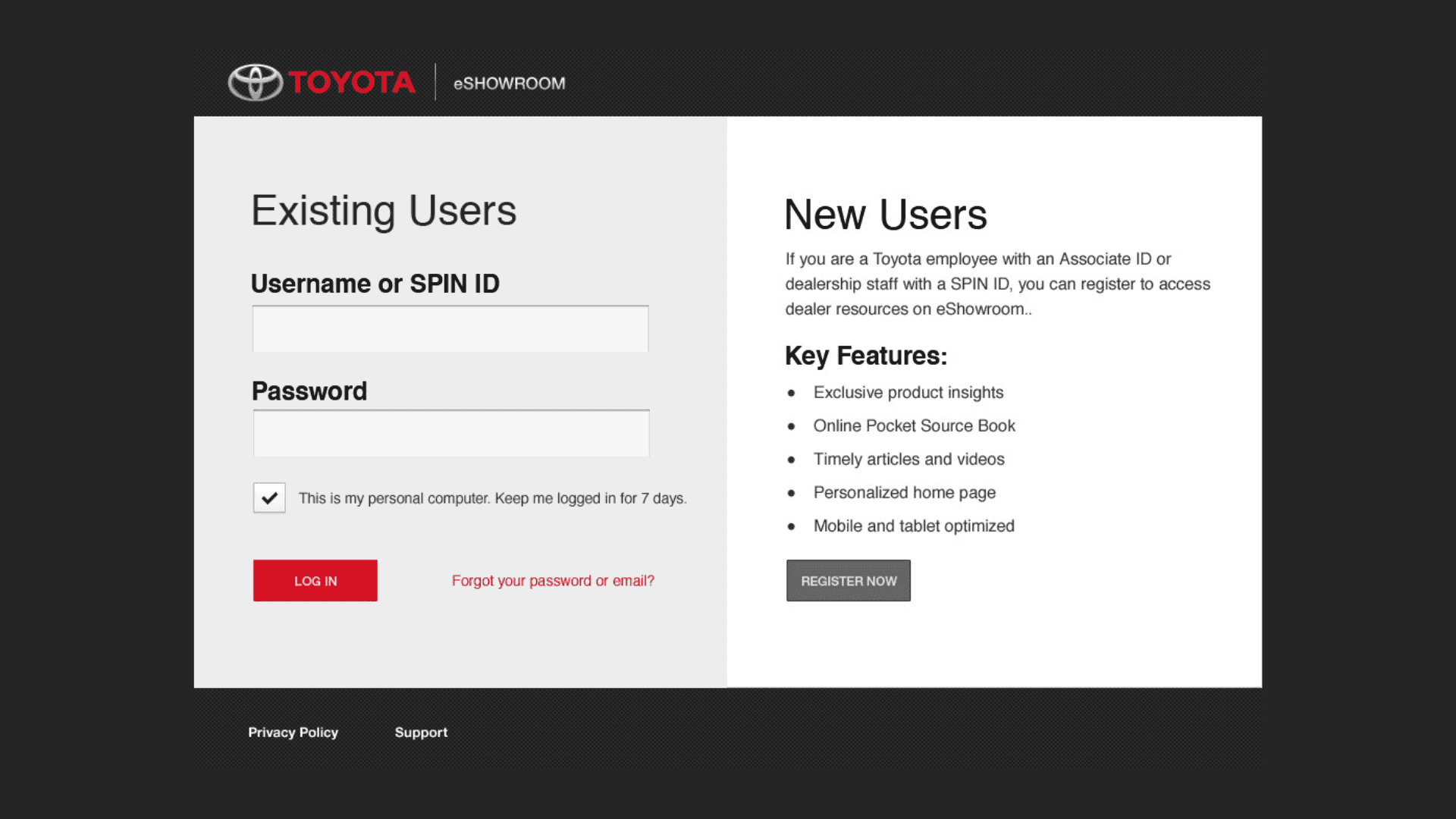
Before eShowroom | After eShowroom |
|---|---|
|
|
The real lesson
We didn't revolutionize car sales by making dealers memorize features. We did it by making them feel smart. Sometimes the best interface isn't the prettiest or the most innovative. Sometimes it's the one that makes someone feel capable of doing their job well.
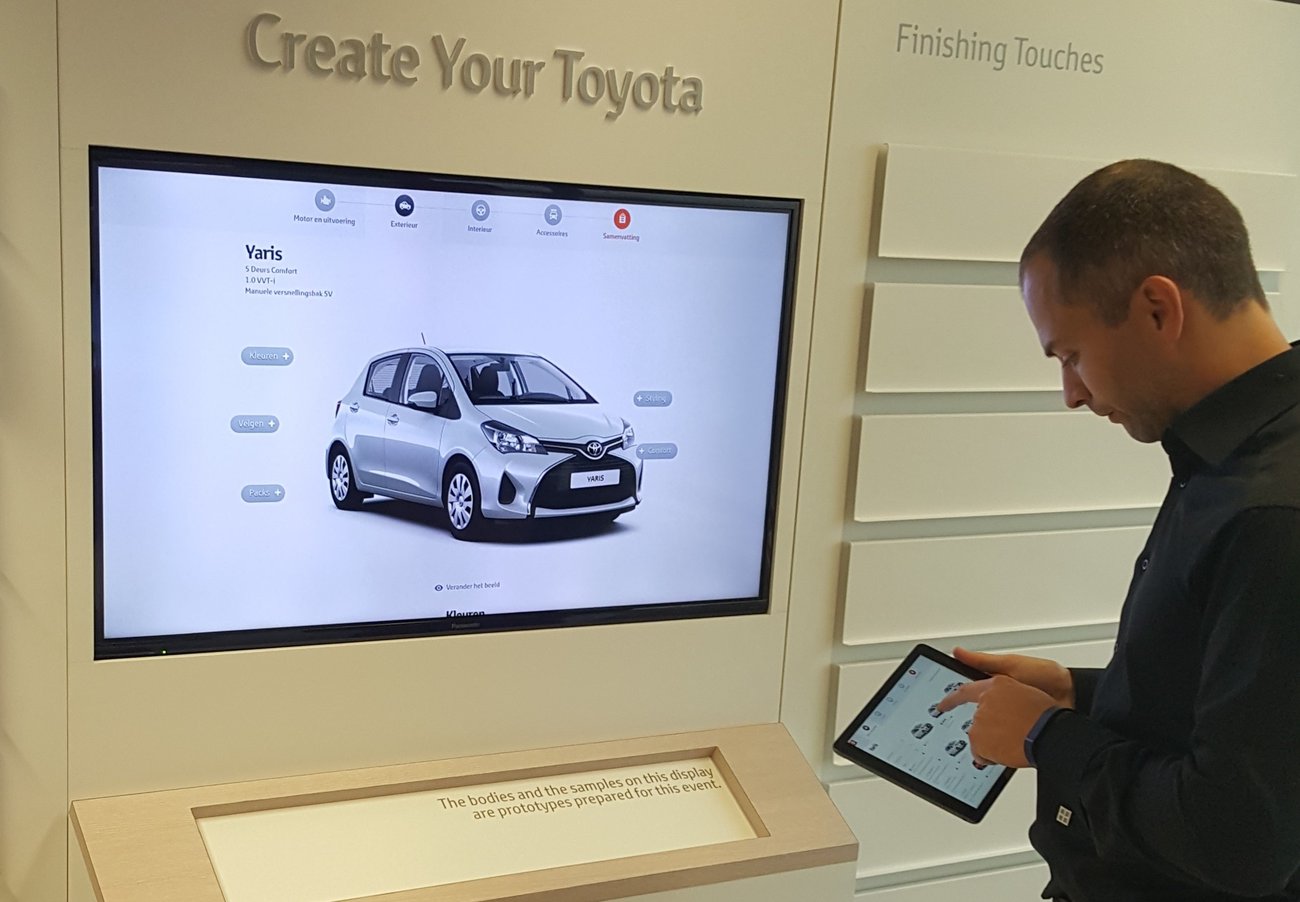
The three-ring binders? A few dealers kept them. For nostalgia. Almost 10 years later, the foundational work we did to wrangle the content into a structured, digital, usable way paved the road for dealerships to be more open with the experience, and let customers browse, build and buy right in the showroom.
Project details
Timeline: 16 months from research to launch
Dealers Impacted: 1,247 locations
Training Modules: 400+
Badges Earned: 47,000 in year one
What really mattered
The three-ring binders didn't disappear overnight. But they became backup, not primary. Old school sellers stopped fearing educated customers. They started welcoming them. For the greenhorns just coming onto the floor fresh from selling phones, the conversation changed from "Let me check" to "Let me show you."
The culture shift
Before eShowroom | After eShowroom |
|---|---|
|
|
The real lesson
We didn't revolutionize car sales by making dealers memorize features. We did it by making them feel smart. Sometimes the best interface isn't the prettiest or the most innovative. Sometimes it's the one that makes someone feel capable of doing their job well.
The three-ring binders? A few dealers kept them. For nostalgia. Almost 10 years later, the foundational work we did to wrangle the content into a structured, digital, usable way paved the road for dealerships to be more open with the experience, and let customers browse, build and buy right in the showroom.
Project details
Timeline: 16 months from research to launch
Dealers Impacted: 1,247 locations
Training Modules: 400+
Badges Earned: 47,000 in year one
Read more stories:

Building tomorrow's intelligence on yesterday's mess
How we turned 20 years of financial services content into an AI-ready foundation
Gotta Serve 'Em All: Redesigning Pokémon.com
Building a digital home for kids, parents, and 30-something collectors

Can you rewrite 13.8 billion years of history?
See how a strategic redesign of content made an edutech platform come to life.